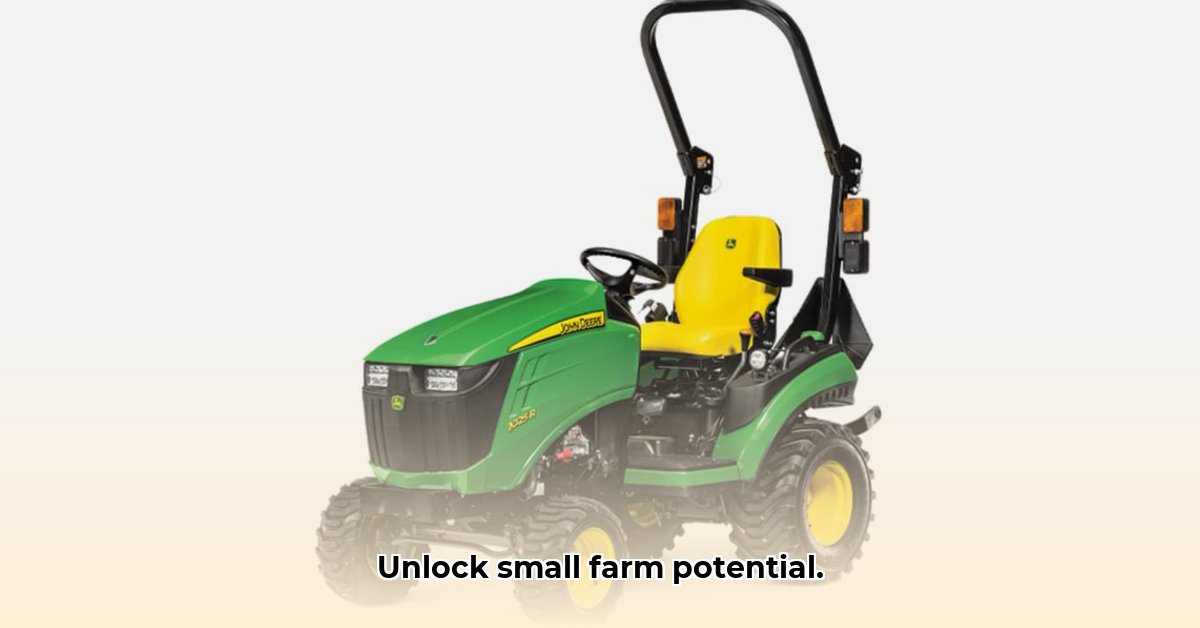
The John Deere 1025R sub-compact tractor offers a compelling blend of power, maneuverability, and versatility, making it a strong contender for small-scale farmers prioritizing sustainable agricultural practices. This detailed review explores its capabilities, costs, and environmental impact, helping you determine if it's the right investment for your operation. For more in-depth specs, check out this detailed review.
Power and Performance: A Mighty Mite
The JD 1025R's engine delivers impressive torque for its size. It handles tasks like tilling, mowing, and powering heavier implements with ease. Its hydrostatic transmission provides smooth and responsive control, essential for precise maneuvering in tight spaces. This translates to increased efficiency – you'll likely complete tasks faster and with less effort compared to older, less efficient equipment. Is this enhanced speed and precision worth the investment in your time and resources? The answer depends heavily on the specific needs of your farm.
Maneuverability: Efficiency in Motion
The 1025R's narrow frame allows for exceptional maneuverability, a crucial advantage in navigating confined spaces between crop rows or in limited-access areas. This agility directly translates to time saved – less time repositioning means more time actively working the land. This boost in productivity can be significant, particularly when compared to larger, less agile tractors. Many farmers report a substantial reduction in overall time spent on tasks like spraying or mowing.
Versatility: A Jack-of-All-Trades
The quick-attach system is a standout feature. Switching between implements is rapid and straightforward, allowing for seamless transitions between various tasks with minimal downtime. This versatility is key – needing fewer separate pieces of equipment saves money and reduces setup and changeover times. As a result, you can accomplish significantly more work in each workday.
Cost Considerations: The Long-Term View
The JD 1025R represents a considerable initial investment. However, a thorough cost-benefit analysis is essential. Consider the current hours spent on labor-intensive tasks. The 1025R is designed to reduce this time investment – offering more time for other critical farm operations. Analyze the initial cost against projected running costs (fuel, maintenance, repairs), including the tractor's projected lifespan and its potential to enhance efficiency and, potentially, crop yields. Leasing might also be a viable option.
"Carefully weigh the initial investment against the long-term savings in labor and increased productivity," advises Sarah Miller, Agricultural Economist at Purdue University. "A detailed cost-benefit analysis, considering the tractor's entire lifespan, is key to making an informed decision."
Sustainability: Farming with a Lighter Footprint
While comprehensive data on the 1025R's full environmental impact is still emerging, its fuel efficiency is a clear sustainability benefit, reducing fuel consumption and, consequently, your carbon footprint. Its compact size can also minimize soil compaction, potentially reducing the need for chemical fertilizers and promoting healthier soil structure. Although precise figures require further research, the reduced fuel use alone signals significant potential for lessening environmental impact.
Comparing the JD 1025R: Finding the Right Fit
The market offers several sub-compact tractors. Comparing models based on horsepower, features, initial cost, and long-term running costs (fuel, maintenance, repairs) is crucial. Don't solely focus on the initial price tag; consider the lifetime cost of ownership. This includes factoring in potential resale value.
Making the Right Decision: Is the JD 1025R Right for You?
Before purchasing, consider these factors:
Farm Size and Terrain: Is your farm's size and terrain compatible with a sub-compact tractor? The 1025R's maneuverability is exceptional, but it might not be suitable for extensive or exceptionally challenging terrains.
Tasks and Implement Needs: Does the 1025R's range of compatible implements address all your farming needs? Create a comprehensive list of essential tasks and confirm the 1025R's capability to perform them efficiently.
Budget and Financing: Can you afford the initial purchase price, along with ongoing maintenance and operating expenses? Explore financing options to determine the best fit for your financial situation.
Long-Term ROI: Will the increased efficiency and labor savings outweigh the initial investment and operating costs over the tractor's lifespan?
By carefully evaluating these factors and conducting thorough research, you can confidently determine if the JD 1025R aligns with your farm's needs and goals. Remember, the ideal tractor is the one that maximizes your efficiency, boosts profitability, and effectively supports your sustainable farming practices.
How to Calculate John Deere 1025R Return on Investment for Sustainable Farming
This section provides a structured approach to calculating the ROI of the JD 1025R, highlighting key aspects important for sustainable farming practices.
Understanding Your Costs
Thoroughly assess both initial and ongoing costs. The 1025R's base price is only a starting point. Include the cost of essential implements (tiller, mower, sprayer – consider both John Deere and budget-friendly alternatives like King Kutter), delivery, taxes, and any additional attachments. Ongoing expenses such as fuel, routine maintenance, potential repairs, insurance, and storage are equally important to accurately budget.
Calculating Labor Savings and Increased Efficiency
This is where significant ROI potential lies. Quantify the time saved using the 1025R versus manual labor for tasks such as tilling, mowing, and spraying. If you currently outsource these tasks, calculate labor cost savings directly.
Consider the potential for increased efficiency. Can you now cultivate more land faster? Will your yields increase? The 1025R's precision capabilities might also lead to reduced chemical usage, further boosting savings.
Tiller Selection: A Crucial Decision
The tiller’s choice significantly influences your ROI. While John Deere tillers often provide better resale value, more affordable options from King Kutter or similar brands might be more budget-friendly. The optimal choice depends on your soil type, budget, and long-term farm plans. Always confirm PTO shaft compatibility.
Environmental Considerations: A Sustainable Perspective
The 1025R's fuel efficiency leads to cost savings while also reducing environmental impact. The potential for decreased chemical use adds to its sustainability advantages. However, remember that manufacturing and eventual disposal still generate an environmental footprint.
Comparing the John Deere 1025R to Alternatives
Research other sub-compact tractors to ensure a well-informed decision. Compare features, prices, running costs, long-term maintenance, and resale values. A thorough comparison will enhance your decision-making process.
Putting it All Together: Your John Deere 1025R ROI Calculation
This is a simplified example; tailor it to your specific situation:
Total Investment: (Purchase price + Implements + Taxes + Delivery + Initial Maintenance)
Annual Operating Costs: (Fuel + Maintenance + Repairs + Insurance + Storage)
Annual Labor Savings: (Hourly wage x hours saved per year)
Increased Revenue: (Increased yield x market price) – This might not be directly quantifiable in the first year.
Net Annual Savings: (Labor Savings + Increased Revenue – Annual Operating Costs)
Simple ROI: (Net Annual Savings / Total Investment) – This calculation may require multiple years to show positive returns.
Resale Value: Factor in the expected resale value; Deere typically holds its value well, influencing long-term ROI.
This is not an exact science. Your farm’s conditions and personal goals significantly impact your actual ROI. Remember to consult with agricultural experts for personalized guidance.